
Last updated November 25, 2026
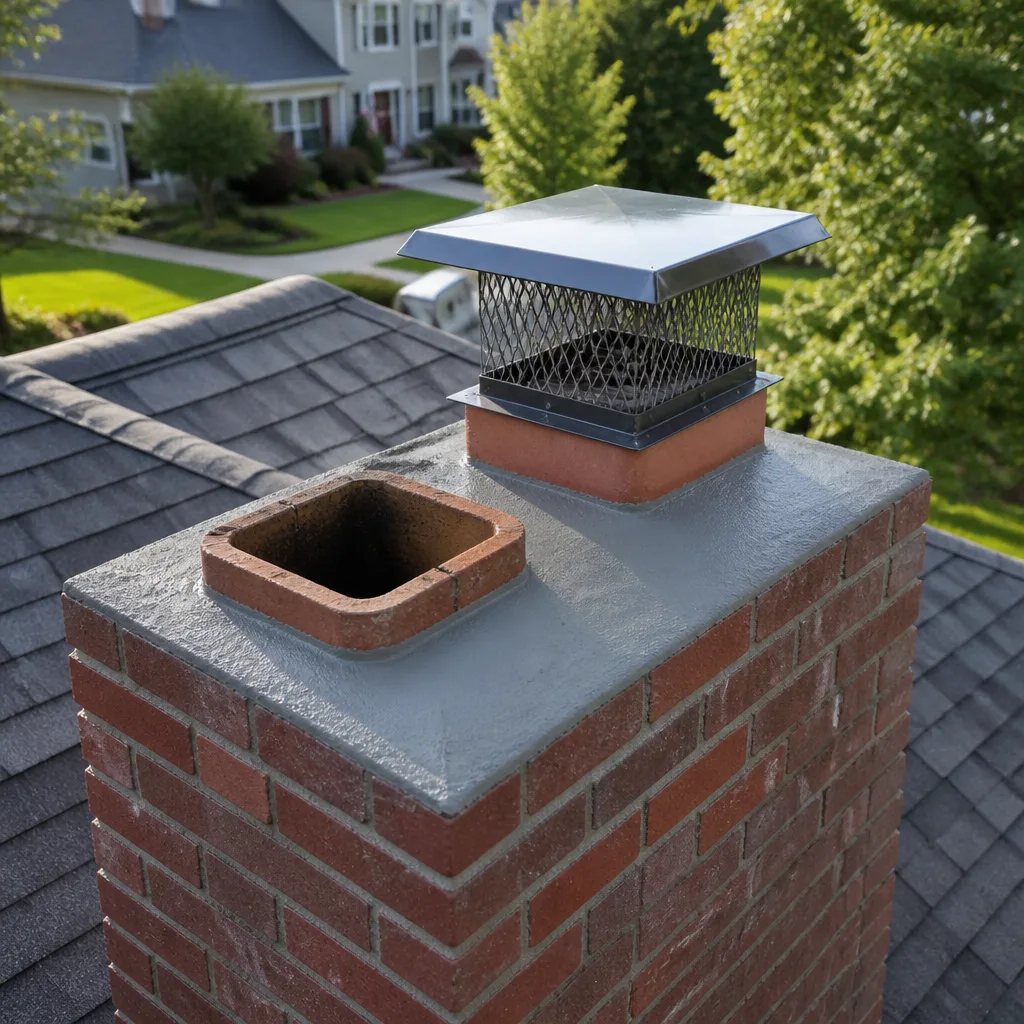 Sweep & inspection
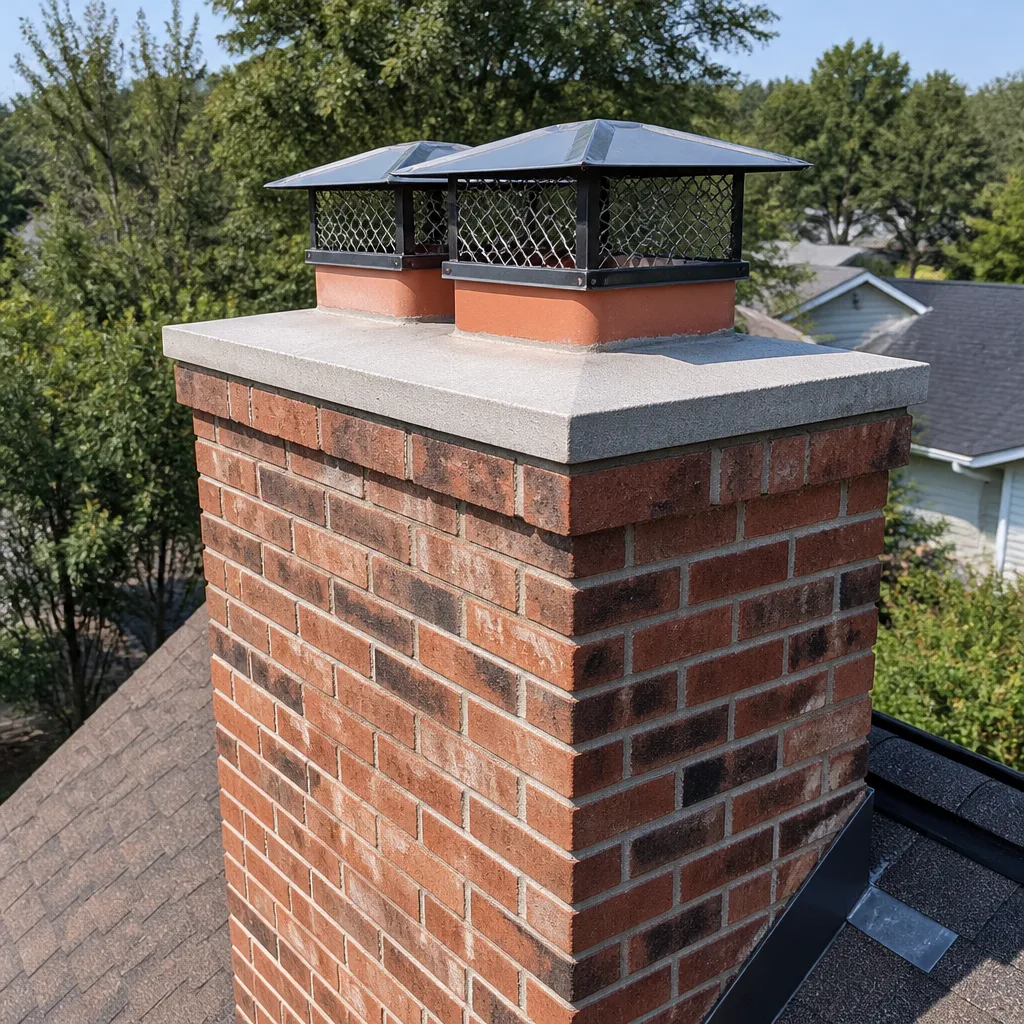 Caps & crowns
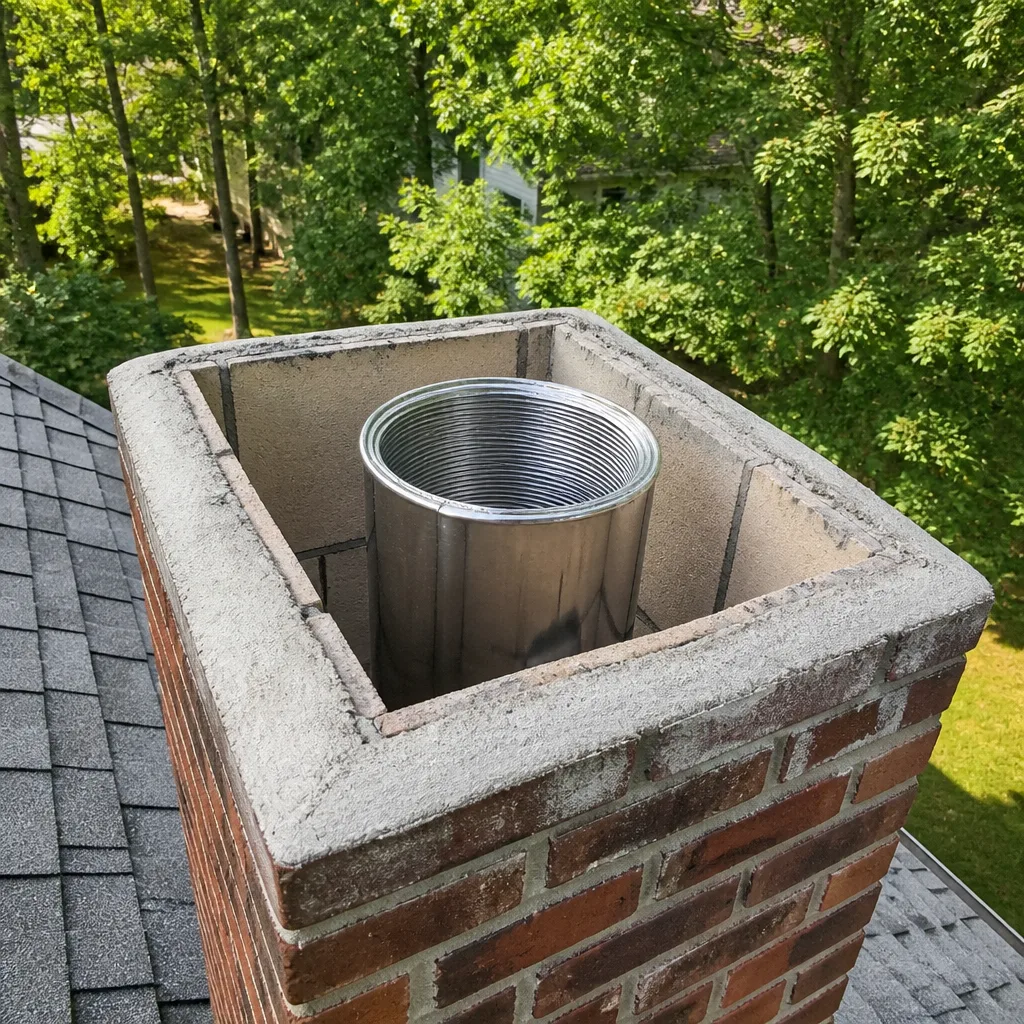 Flue relining
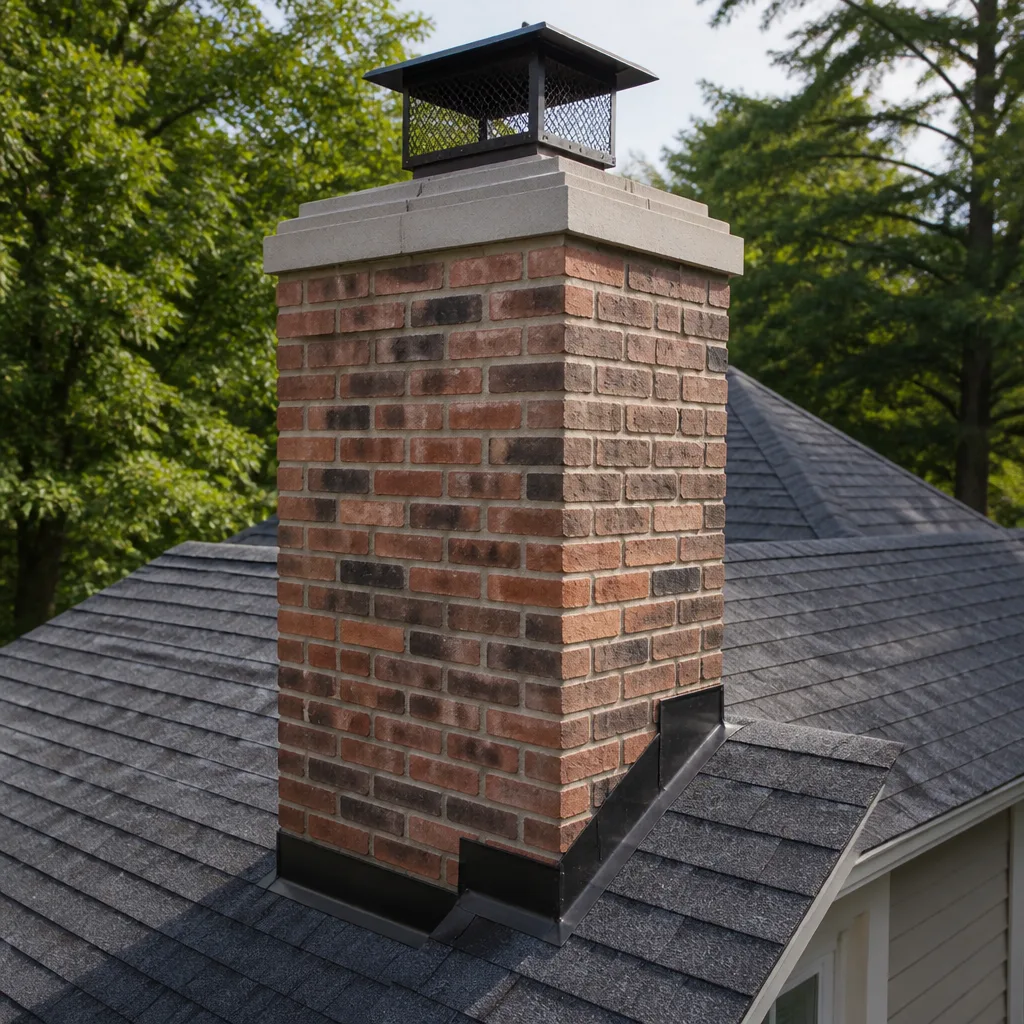 Masonry repair
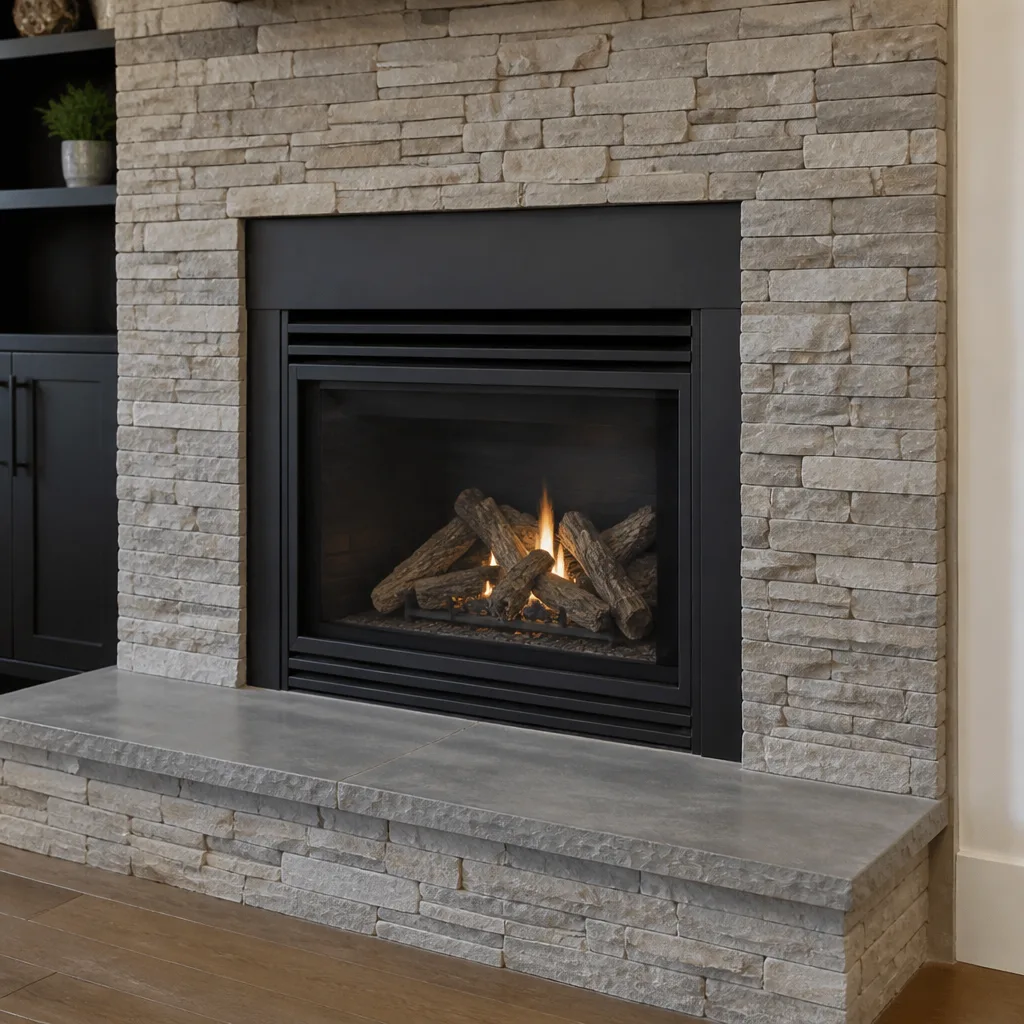 Gas fireplace service
Level 1 sweep and inspection to the NFPA 211 annual standard - flue, crown, cap, and flashing checked and photographed
Chimney sweep logs do not sweep chimneys. They loosen some creosote - which then falls where a brush and vacuum still have to collect it.
How to Hire a Chimney Cleaning Contractor in Bellevue: A Step-by-Step Guide
“Are you licensed?” is the wrong first question to ask a chimney contractor. Washington doesn’t hand out a separate chimney license the way some states do, so nearly everyone can answer “yes” to that and still mean very different things by it. The question that actually separates a specialist from a generalist shows up in what they bring through the door: a camera, a flashlight, or just a brush and a tarp. In Bellevue, you can hire a crew with closed-circuit video inspection and a written report, or a seasonal handyman who sweeps what they can see and calls it done. The prices sit closer than you’d guess. The difference in what you learn about your chimney is where the gap widens. This guide walks through what to ask, how to compare quotes fairly, and what a real service visit should look like.
Quick Answer
Hire a chimney cleaning contractor in Bellevue by confirming three things before you book: that they perform a documented inspection as part of the sweep, that they can run a closed-circuit camera through the flue and show you the footage, and that their written report states what they found and what, if anything, needs doing. Verify certification directly rather than taking a badge at face value, and treat any quote that skips an inspection or prices far below the local range as a reason to slow down. A specialist who documents the work is easier to trust than one who just hands you a bill.
Styles & brands we work with
- Sweep & inspection
- Caps & crowns
- Flue relining
- Masonry repair
- Gas fireplace service
Table of Contents
- Why Diagnostic Equipment Matters More Than a License
- What CSIA Certification Actually Means and How to Verify It
- Questions to Ask About Liner Inspection Before You Book
- Red Flags in a Chimney Cleaning Quote
- How to Compare Chimney Quotes Apples to Apples
- What to Expect on the Day of Service
- When a Sweep Turns Into Repair Work
- What Makes Bellevue Chimneys a Little Different
Why Diagnostic Equipment Matters More Than a License
Most homeowners in Bellevue start with the license question because that’s what they’ve been trained to ask for any trade. It’s a reasonable instinct, but it points at the wrong thing for this particular job. A general contractor’s registration tells you a business is set up to operate legally. It tells you nothing about whether the person cleaning your flue can spot a cracked liner tile, a failed mortar joint half a foot above the smoke chamber, or a nest wedged where no brush can reach. Those are the things that determine whether your fireplace is safe to use this winter.
What actually separates a specialist from a generalist is the kit they bring and what they do with it. A proper chimney sweep in Bellevue involves more than scraping creosote off the walls. The visit should include an inspection of the flue interior, the firebox, the damper, the smoke chamber, and the cap and crown up top. A camera is how that inspection becomes something more than a guess.
Ask specifically whether they use a closed-circuit video system. A hand-held camera on a rod fed down the flue lets the technician see the full length of the liner, not just the parts they can reach or light with a flashlight from above. Without it, problems above the smoke shelf or behind a bend are essentially invisible. Many sweeps will tell you the flue “looks fine.” A camera lets them show you.
- Flashlight and mirror: the old standard. Shows the lower flue and firebox, misses most of what’s above.
- Hand-held camera on a rod: lets the technician record the whole flue and share the footage with you.
- Documented report: the footage should be paired with a written summary you keep. Ask for it before you book.
When a company brings a camera and hands you a report, the conversation about your chimney changes. Instead of “you need a liner” with no evidence, you get a photo of the failed section. We tell you exactly what we find, and we’ll happily walk you through the footage on the spot. That’s the standard worth holding any Bellevue chimney contractor to.
What CSIA Certification Actually Means and How to Verify It
The Chimney Safety Institute of America (CSIA) is the credential most chimney professionals in the trade point to, and it’s the one worth asking about. CSIA certification isn’t a license handed out by the state. It’s a voluntary credential that a technician earns by passing an exam on chimney and venting systems, codes, and safety, and keeps current through continuing education. It exists specifically for this trade. A general contractor’s license doesn’t test any of that.
That distinction matters in Bellevue because chimney work touches fire safety and venting code in ways a handyman’s general registration never covers. A certified technician has been tested on how liners vent, how clearances work, and how combustion byproducts behave. When something’s off in the flue, that’s the knowledge you want on the other side of the question.
Verifying it is straightforward, and you should do it rather than trust a logo on a website.
- Ask for the technician’s CSIA certification and note the name and certification number.
- Look the certification up in the CSIA’s online directory rather than relying on a screenshot or a badge in a brochure.
- Confirm the person doing the work is the one certified, not just the company’s front office.
- Ask whether the inspection will be documented in writing regardless of who performs it.
One more thing worth knowing: certification is per-person, not per-company. A chimney business can be CSIA-affiliated while a particular technician is still working toward certification. There’s nothing wrong with that as long as you know what you’re getting. The point of asking is to know. Our technicians have up to 11 years of experience, and we’re happy to talk through credentials before you book.
Questions to Ask About Liner Inspection Before You Book
The liner is the part of your chimney that does the most safety-critical work, and it’s the part most homeowners never actually see. A clay tile liner can crack from a previous chimney fire, settle from house movement, or degrade from years of acidic condensation. When it fails, hot gases and carbon monoxide can move into the structure of the house instead of up and out. A sweep who doesn’t inspect the liner isn’t really inspecting your chimney.
Before you commit to a booking, ask these questions directly. The answers tell you a lot about the operation.
- Do you run a closed-circuit camera through the flue? The right answer is yes, and they can describe how they use it.
- Will I see the footage or photos? You should. A report you can’t verify isn’t much of a report.
- What do you check besides creosote buildup? Look for liner condition, joints, the smoke chamber, the damper, and the cap and crown.
- If you find a problem, what’s your process for recommending repair? A good answer explains it will be documented and quoted, not pushed on the spot.
- Do you perform relining yourself, or do you subcontract it? This matters because relining is the most structurally critical part of the job.
That last question carries real weight. We handle DuraFlex liner systems directly, which means the most important repair work isn’t handed off to a third party who never saw the inspection. For flues that are deteriorated but still structurally sound, we can resurface with HeatShield rather than defaulting to a full reline. Those are different tools for different situations, and a contractor who only offers one answer is worth a raised eyebrow.
If you’re facing repair work and want a straight answer before committing to anything, a standalone Bellevue Chimney Sweep inspection gives you documented clarity with no pressure to buy a repair the same visit. We’d rather you understand your chimney than feel sold to.
Red Flags in a Chimney Cleaning Quote
Most chimney cleaning quotes you’ll get in Bellevue look similar on the surface. The differences hide in what’s included and what’s left out. Knowing what to watch for saves you from paying twice.
Unusually low flat-rate pricing. A price well below what everyone else in the area is quoting usually means something is missing from the scope. Often it’s the inspection. Sometimes it’s proper containment or a camera check. A sweep who spends less time and brings less equipment can charge less, but you get less.
No mention of an inspection. A sweep without an inspection is a cleaning, not a service. You’ll get creosote removed and no information about your liner, your cap, or your smoke chamber. Those are exactly the things that cause problems.
Vague scope descriptions. “Chimney cleaning” on a quote tells you almost nothing. Look for language that spells out what’s checked, what’s cleaned, and what’s documented.
Pressure to approve repair on the spot. A legitimate finding comes with a written explanation and photos you can review at your own pace. Urgency without evidence is a sales tactic.
No written report. If the visit ends with a verbal “you’re all set,” you have nothing to reference next season.
No identifiable expertise. If the company can’t tell you who’s doing the work or what their certification is, treat that as a serious question mark.
Red flags aren’t always dramatic. Often the problem with a weak quote is what it omits rather than what it says. Read the scope carefully, ask what’s included, and remember that the cheapest quote is frequently the one that leaves the most unchecked.
How to Compare Chimney Quotes Apples to Apples
The biggest mistake homeowners make when comparing chimney quotes is comparing bottom-line numbers when the two contractors aren’t scoping the same work. One quote might cover a sweep plus camera inspection plus a written report. Another might cover a brush and a shop vac. Those aren’t the same service, and picking the cheaper one isn’t saving money if you walk away without knowing your chimney’s condition.
Here’s how to build a fair comparison.
- List what each quote includes by function. Sweep, inspection, camera check, written report, cap and crown check. Line them up side by side.
- Note whether inspection is included or an add-on. If it’s separate, add it to the total so you’re comparing complete visits.
- Ask who performs the work and what their certification is. The person doing the sweep matters as much as the price.
- Check the repair path. If something turns up, does this contractor handle relining and resurfacing in-house, or do they hand it off?
- Read the report commitment. Will you get documentation in writing regardless of what’s found?
Once you’ve done this for each quote, the comparison becomes obvious. Two Bellevue contractors can quote very similar prices and provide very different levels of service. The one who includes the camera check and the written report is often only modestly more, sometimes the same, and you leave with information the other visit wouldn’t have produced.
We build every quote so the scope is clear before we start. You’ll know what’s included, what the inspection covers, and what happens if the camera finds something. The written estimate sets the final price. No surprises.
What to Expect on the Day of Service
Knowing what a proper visit looks like helps you spot shortcuts. Here’s what to expect from a Bellevue chimney cleaning that follows the standard you should be holding a contractor to.
Access and setup. The technician needs access to the fireplace and a path to the roof. Clear the hearth of fireplace tools, screens, and anything fragile. If there’s a woodstove or insert, mention it when booking so they bring the right equipment. Roof access is a real consideration, so flag anything unusual like a steep pitch or a skylight nearby.
Dust containment. A professional sweep drops a drop cloth and runs a high-efficiency vacuum in the firebox for the duration of the work. If someone arrives without dust control, that’s a sign.
Duration. A standard sweep with inspection usually runs roughly an hour to ninety minutes, and longer if the flue is heavily fouled or an insert is involved. A visit that’s over in fifteen minutes is a visit that skipped most of the inspection.
The report. What you get in writing should cover the condition of the flue interior, the firebox, the damper, the smoke chamber, the cap and crown, and any recommendations with a clear reasoning behind them. Photos or footage should accompany any finding that calls for repair.
We include camera inspection and a photo report with the sweep as standard. Nothing we recommend gets suggested without evidence you can see yourself. That’s the difference between a service and a sales visit, and it’s easy to recognize once you know what to look for. If a quote you receive doesn’t include a report, ask why. The answer itself is informative.
When a Sweep Turns Into Repair Work
Sweeping solves one problem: creosote and soot buildup. It doesn’t fix a failing liner, a cracked crown, a damaged damper, or a broken firebox. Those fall into the repair side of the trade, and homeowners often don’t realize they’re two distinct skill sets until they’re facing the second one.
This is why choosing a contractor who handles the full system matters. If your sweep is separate from your repair guy, you end up making two calls, explaining the situation twice, and hoping the two don’t point fingers at each other. A contractor who performs chimney cap & crown work, fireplace repair, and relining brings continuity to the job.
Common repairs that turn up in Bellevue include:
- Liner deterioration or cracking – addressed with HeatShield resurfacing when the liner is still structurally sound, or a DuraFlex liner system when a full reline is needed.
- Cap and crown damage – a cracked crown lets water in, which accelerates deterioration throughout the chimney.
- Damper and firebox issues – a damper that won’t seal changes how the fireplace drafts, and firebox mortar that’s failed allows moisture into the structure.
Repairs should always be quoted from documented findings, not from what a technician guesses on a quick walkthrough. Our work with product lines like Copperfield and Gelco means the parts going into your chimney are professional-grade, installed to code, and built to last rather than to get you through the season.
What Makes Bellevue Chimneys a Little Different
Bellevue homes span a wide range. Older neighborhoods hold mid-century construction where chimneys were built with methods and materials that predate some modern venting standards. Newer development includes modern prefabricated systems with their own inspection and repair requirements. That variety means no single approach fits every house, and a contractor who works mostly in one type of home may miss problems common to the other.
The Pacific Northwest climate adds its own wrinkle. Wet, mild winters leave chimneys exposed to constant moisture cycling through the fall and spring. Water soaking into a masonry crown and freezing is one of the leading causes of chimney deterioration here, which is why caps and crowns get so much attention in this region. Once water gets in and the freeze-thaw cycle starts working on the masonry, the repair is usually several times the cost of a crown that was sealed properly to begin with.
The way Bellevue homeowners use their fireplaces also affects how often service is needed. A fireplace used regularly through the heating season builds up creosote faster than one burned only a handful of evenings a year. If a chimney hasn’t been serviced since you bought the house, the first visit is essentially a baseline: it establishes what’s there so future visits have something to compare against.
Bellevue sits in a market where the range of available contractors is wide. That’s a good problem. It means you can find a specialist who handles the full system, sweep through cap work, under one contractor. It also means the homeowner who doesn’t ask the right questions can end up with a visit that looks professional but leaves the important things unchecked. Asking about camera inspection, certification, and written reports is how you sort one from the other in a few minutes.
Common Mistakes to Avoid
- Leading with the license question and stopping there. In Washington, a general contractor’s registration says almost nothing about chimney expertise. Ask about CSIA certification and diagnostic equipment instead.
- Choosing the cheapest quote without reading the scope. A low price often omits the inspection, which is the whole point of the visit. Compare what’s included, not just the total.
- Accepting “looks fine” without seeing evidence. Ask for the camera footage or photos. A visual check from the firebox upward misses the parts of the flue most likely to fail.
- Hiring a general handyman for liner work. Relining and resurfacing are structurally critical. If a company doesn’t perform that work as a specialist, the quality of the handoff is out of their hands.
- Skipping the cap and crown check. Bellevue’s wet climate punishes a cracked crown more than most places. A sweep that ignores it leaves the most water-damage-prone part of the chimney unassessed.
- Booking a sweep after buying a home without asking for the previous owner’s records. If the chimney hasn’t been serviced in several seasons, plan on a full inspection rather than a basic clean.
- Waiting until the middle of winter to book. Fall fills up. A Bellevue chimney that gets diagnosed in early autumn has time to be repaired before cold sets in.
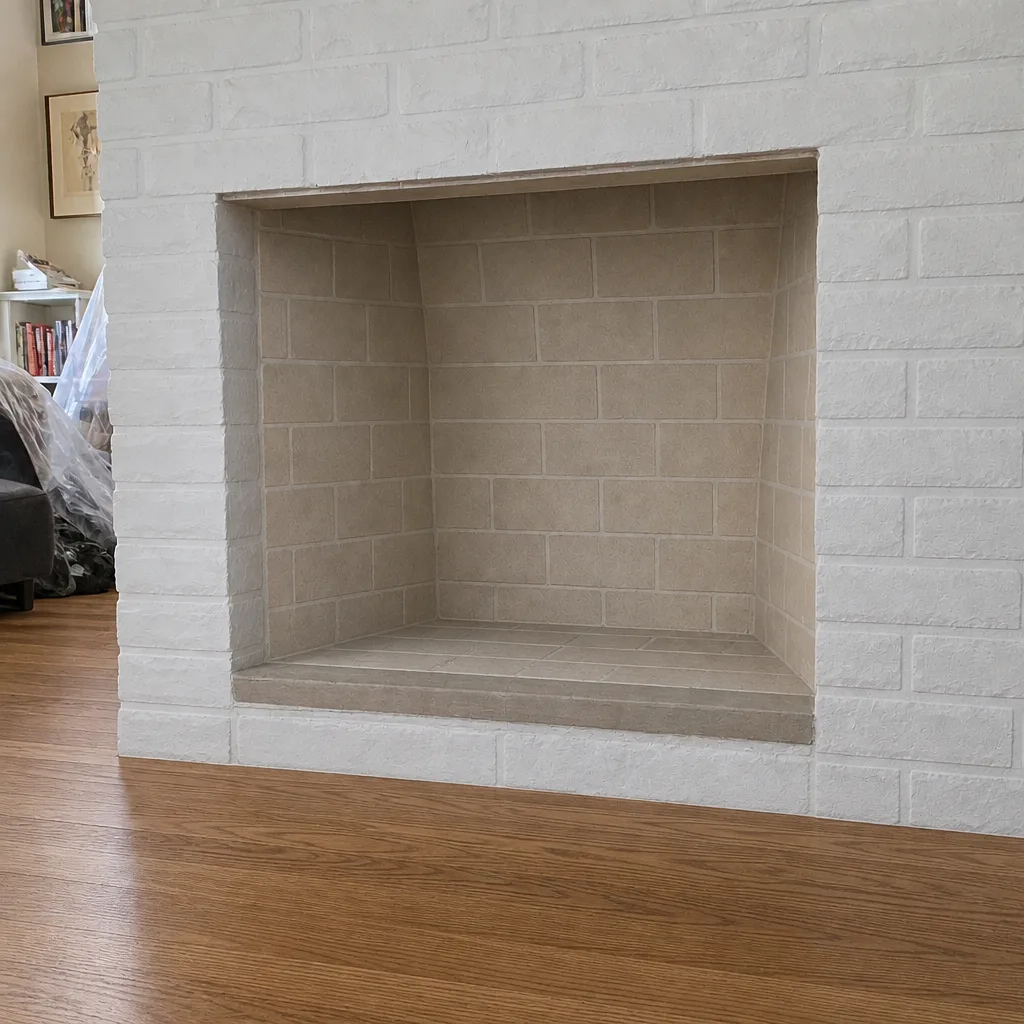
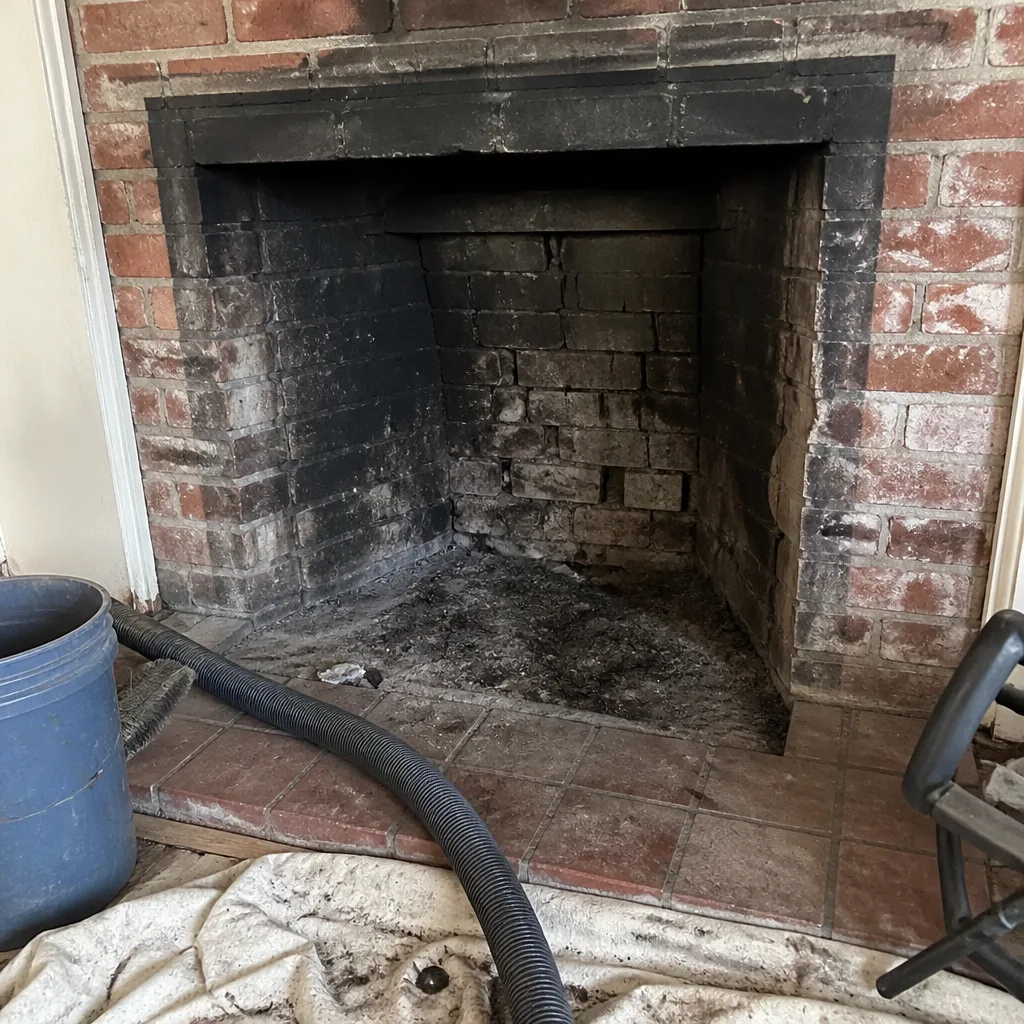
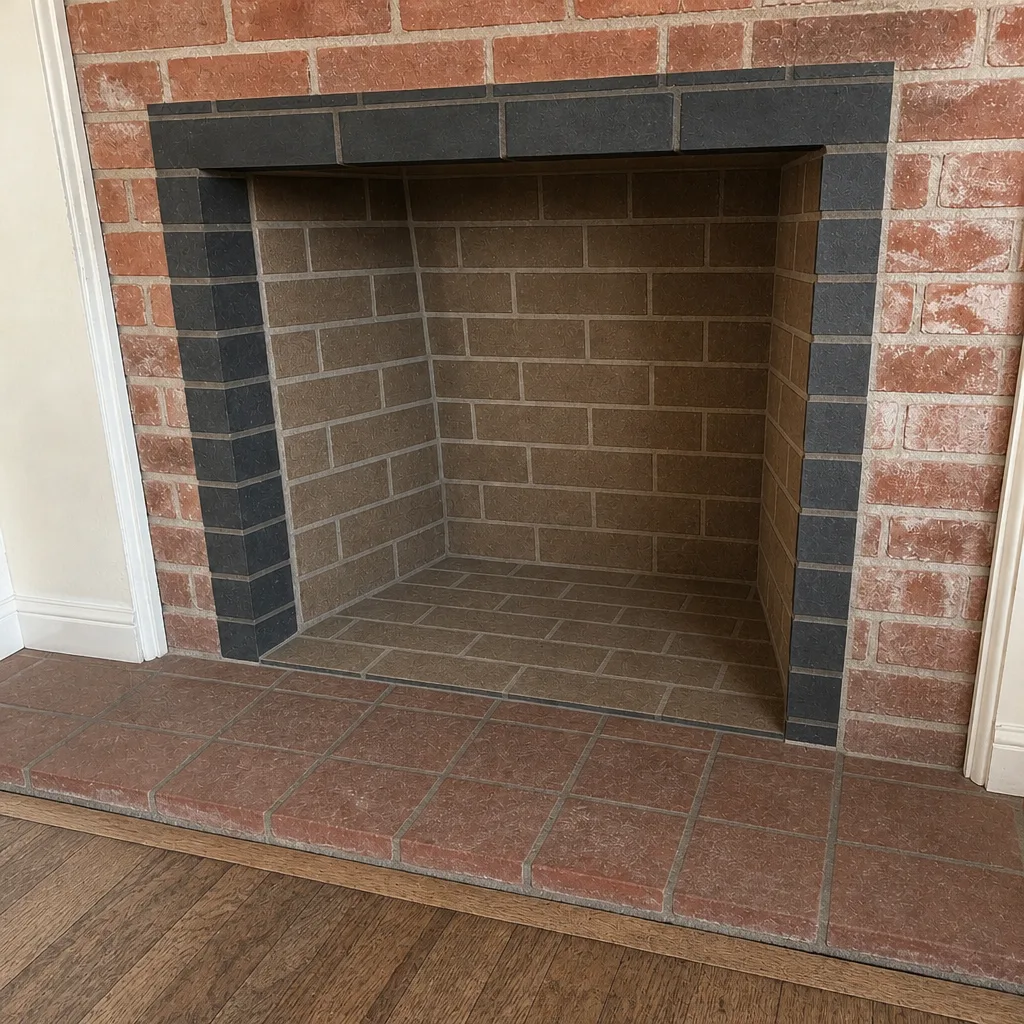
See the difference
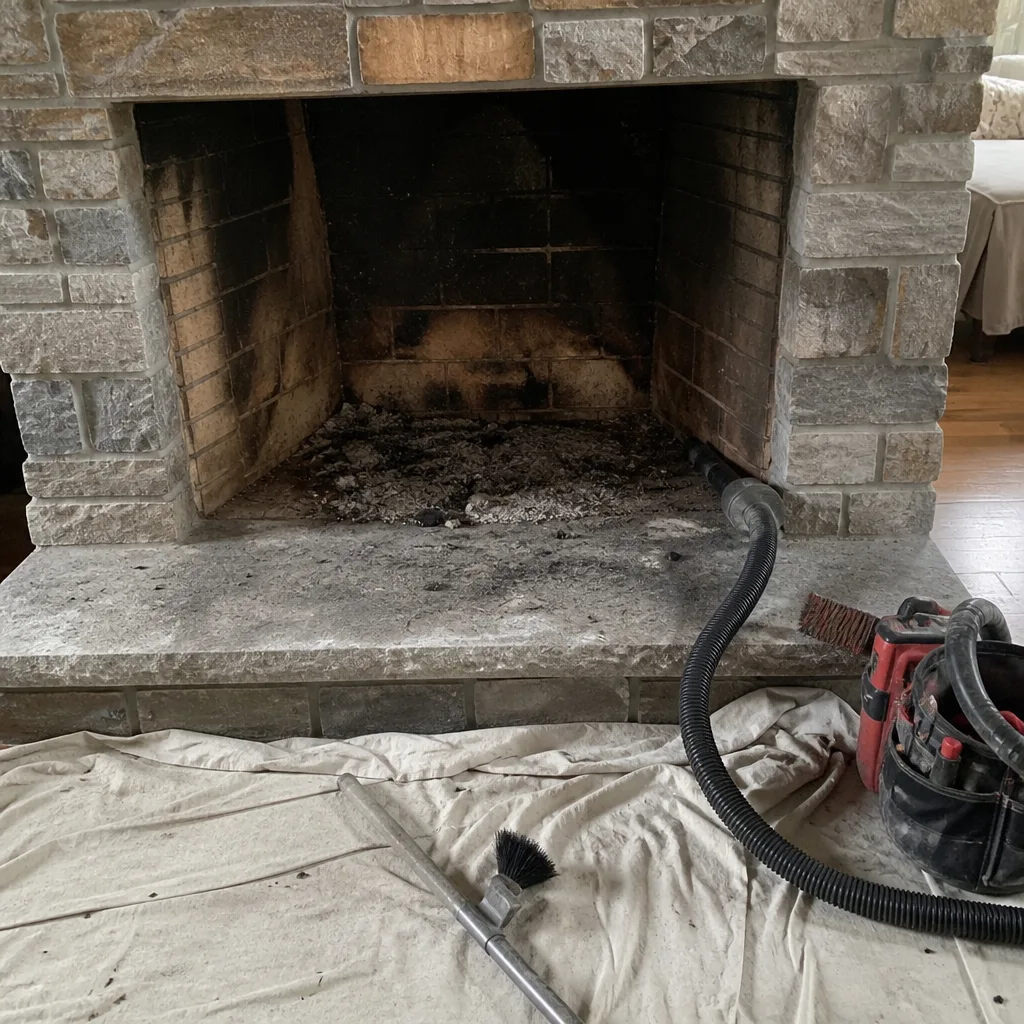 Before
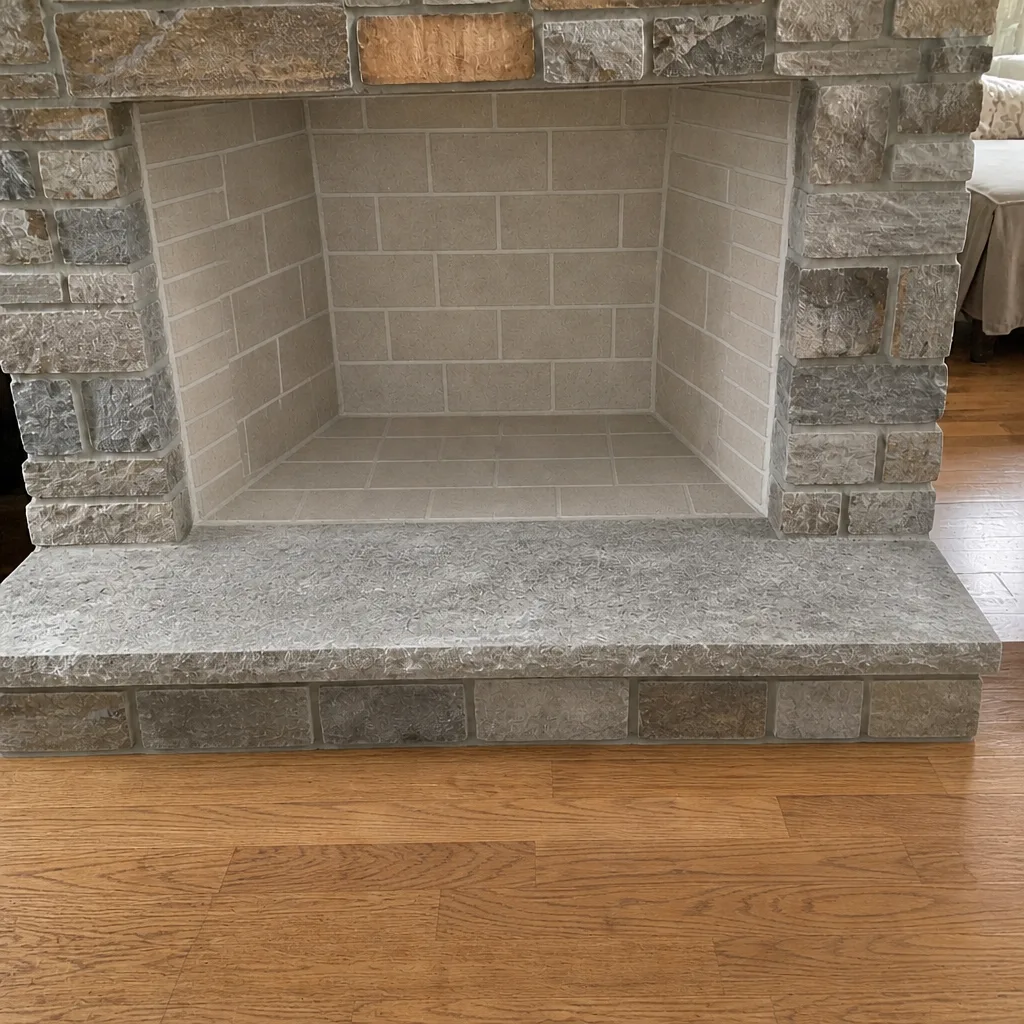 After
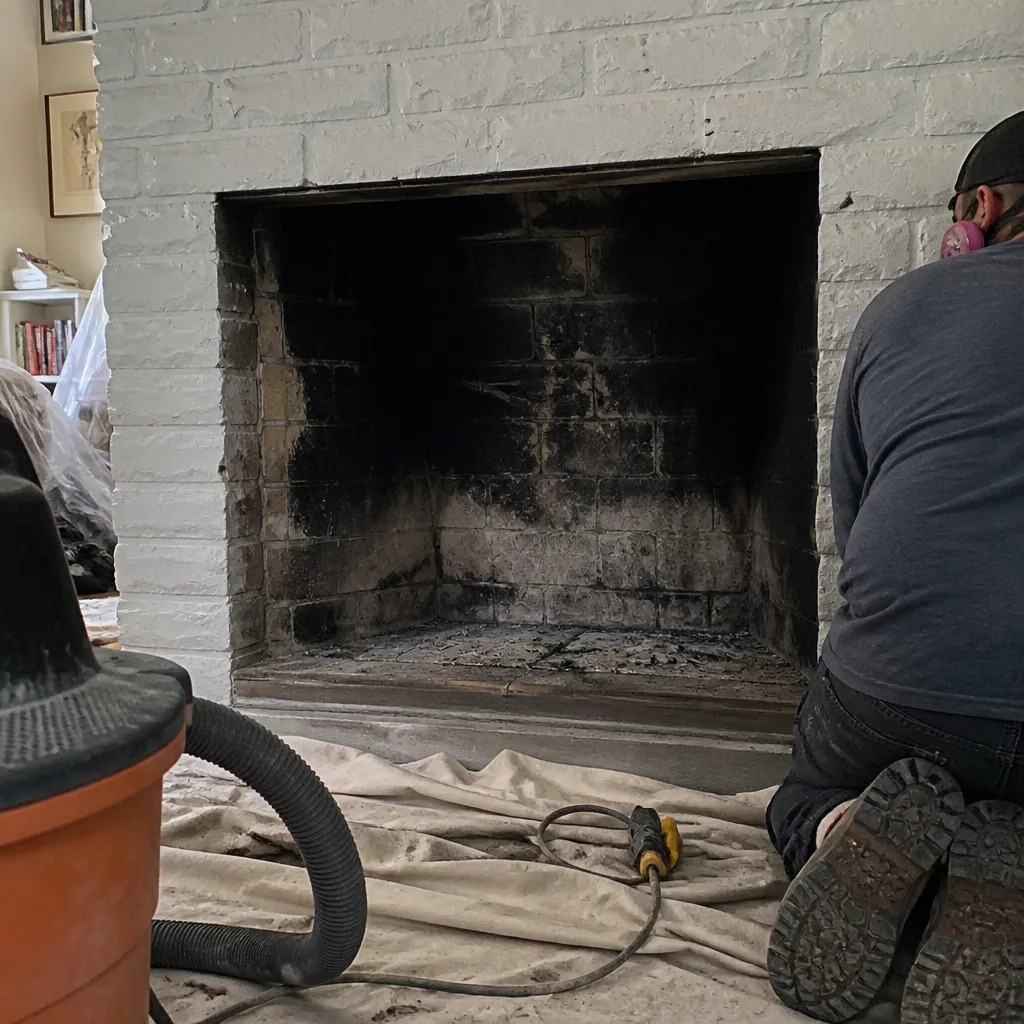 Before
 After
 Before
 After
When to Call a Professional
Some situations warrant a call regardless of where you are on the service schedule. If you’ve just bought a home and don’t have service records, a full inspection is the starting point. If it’s been more than a couple of seasons since the last sweep, that’s the threshold. If you notice smoke rolling back into the room during a burn, a persistent draft problem, or a strong odor after using the fireplace, those are signs something is off in the flue and needs a look. Visible cracking in the firebox mortar, staining on the chimney exterior, or a cap that’s come loose are all reasons to call now rather than wait for the next scheduled visit.
Bellevue Chimney Sweep offers free estimates in Bellevue. Call (844) 625-7326. We answer 24/7. Fast dispatch from 7am to 7pm, Sunday through Friday.
Frequently Asked Questions
Ask whether they use a closed-circuit camera and whether you’ll see the footage or photos. A company that inspects properly will describe the equipment and the report you’ll receive. If the answer is vague, ask for a sample report before booking. The right company will send one without hesitation.
For chimney work specifically, CSIA certification matters more than a general contractor’s license because it tests chimney and venting knowledge directly. Verify certification by looking the technician up in the CSIA directory. A Bellevue company that holds certification will have no problem with you checking. Call (844) 625-7326 if you’d like to discuss what certification covers for your situation.
A price well below the local range usually means something was left out of the scope, most often the inspection. Ask the company to walk you through exactly what the quote includes: camera check, written report, cap and crown inspection. If any of those are missing, the comparison isn’t fair. Call (844) 625-7326 for an exact quote on a full visit that includes each of those items. Estimates are free.
Most households do well with an annual sweep and inspection, though it depends on how often you burn and what you burn. Soft woods and frequent fires build creosote faster. The right answer is to book a visit, see what the inspection finds, and set a schedule from there. Call (844) 625-7326 for an exact quote. Estimates are free.
It depends on the extent of the damage and what the camera shows. Some liner deterioration can be resurfaced with HeatShield without a full replacement. When the liner is too far gone, a DuraFlex liner system is the fix. Either way, the recommendation should be backed by footage you can see, not a guess made from the firebox. Call (844) 625-7326 for an exact quote. Estimates are free.
Clear the hearth, remove fireplace tools and screens, and make sure the technician has a clear path to the fireplace and the roof. If you have an insert or a woodstove, mention it when booking so the right equipment comes along. If you’re not sure what you have, ask. Call (844) 625-7326 for an exact quote. Estimates are free.
The Bottom Line
Hiring a chimney contractor in Bellevue comes down to three questions: will they inspect the flue with a camera, will they show you what they found in writing, and can they handle the repair if the inspection turns something up. Those answers separate a specialist from a sweep who cleans what’s easy to reach. CSIA certification tells you the person doing the work has been tested on the trade. A written report with photos means you can trust the findings. Bellevue Chimney Sweep works with product lines like DuraFlex, HeatShield, Gelco, and Copperfield so the repairs that follow a sweep are handled by the same crew that found the problem. When you’re ready to book, call us. We tell you exactly what we find.
Call (844) 625-7326 for a free estimate. We answer 24/7. Fast dispatch from 7am to 7pm, Sunday through Friday.
Written by the team at Bellevue Chimney Sweep.